Median Year-1 federal savings: $107,473 · IQR $93,069–$108,113

30A, FL cost segregation: what 5 representative properties actually produce

Engine-derived ROI benchmarks for 30A-area short-term rentals, single-family rentals, and small commercial properties. Numbers come from running real fixtures through the Cost Seg Smart engine, same engine that produces your actual study. Studies from $495.

Operated by Cost Seg Smart. Studies are IRS-aligned with engineer review included. 5 fixture benchmarks computed May 2026.

The 30A numbers, distilled

$107,473
Median Year-1 federal savings (100% bonus, 37% bracket)
Interquartile range: $93,069 – $108,113
27.2%
Median reclassification ratio
IQR: 26.9% – 27.7% · Full range: 17.5% – 28.9%
27.2%
Median land allocation
IQR: 23.8% – 50.0%
5
Representative fixtures
Spanning 5 30A sub-markets

Numbers above are engine-estimated outputs from running 5 representative fixtures, not promises about what your specific property will produce. Results vary based on actual property condition, year built, renovation history, county assessor data quality, and rental treatment (STR vs LTR). Full per-fixture table, neighborhood breakdown, and downloadable CSV/PDF on the 30A cost seg benchmarks page.

Why 30A is different

The Highway 30A corridor along Walton County's South Walton beaches is a distinctly different cost-seg market from neighboring Destin. Where Destin is condo-heavy and Okaloosa County, 30A is overwhelmingly single-family beach-cottage stock in Walton County, with the original New Urbanist developments at Seaside and WaterColor anchoring an architectural style that defines the rest of the corridor. The buyer profile is meaningfully higher-income (typical $1.4M+ versus Destin's $685K condo median) and frequently more sophisticated about cost-seg as part of the underwriting conversation.

The structural advantage is Florida's zero state income tax, same as Destin. Federal §168(k) bonus depreciation at 100% under OBBBA produces the entire tax-savings calculation cleanly, no state-side reconciliation. For a 30A buyer in the 37% federal bracket taking $150,000 of accelerated reclassification on a $2.85M Rosemary Beach property, that's $55,500 of Year-1 cash captured in full, no addback friction.

The structural challenge is high land allocation on the core 30A New Urbanist communities. Engine outputs for Seaside, Rosemary Beach, and Alys Beach run 32–38% land, beach-community design covenants, lot-size scarcity, and proximity-to-amenity premiums concentrate value in the land component rather than the structure. That compresses depreciable basis as a percentage of purchase, which compresses the reclassification ratio percentage even when absolute dollar amounts remain large. The off-corridor product (Grayton Beach, Inlet Beach, Dune Allen, Santa Rosa Beach) runs lower land allocations (22–28%) with better percent-of-purchase ROI.

Property archetype-wise, 30A is unusually FF&E-dense for furnished beach STR, sleeps-12+ layouts, multiple full kitchens, beach equipment storage rooms, smart-home tech, and high-end FF&E packages designed for luxury vacation rental traffic. The 5-year personal property pool runs larger per square foot than most beach markets.

Florida state tax position: Florida has no state individual income tax. Federal §168(k) bonus depreciation under OBBBA's restored 100% is the entire tax story for 30A STR owners. No state addback, no decoupling math. Combined with Walton County's STR-friendly regulatory environment, this is among the cleanest cost-seg tax positions in the country. The 6% Florida state sales tax plus 5% Walton County tourist development tax ('bed tax') apply to short-term rental income but don't affect the federal income tax computation cost segregation changes.

Verify with your CPA. State tax conformity rules for federal §168(k) bonus depreciation are adjusted frequently, multiple states have modified their treatment two or more times in the past decade. The general framing on this page reflects our understanding as of May 2026, but you should always verify current-year treatment with a qualified CPA or tax attorney before relying on specific dollar projections for your situation.

Engine outputs: 5 30A fixtures

These aren't rough estimates. Each fixture was run through the same engine that produces your actual study, RSMeans 2024 base costs, BLS PPI time index, county assessor land allocation, IRS Pub. 946 / Rev. Proc. 87-56 MACRS classification, 100% bonus depreciation per OBBBA.
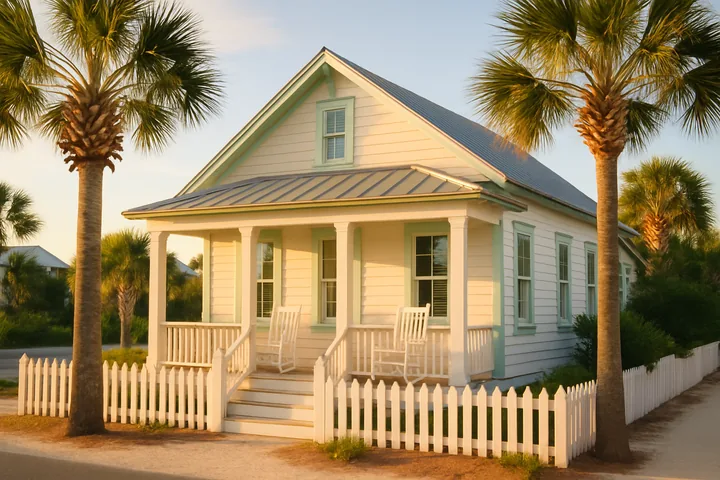
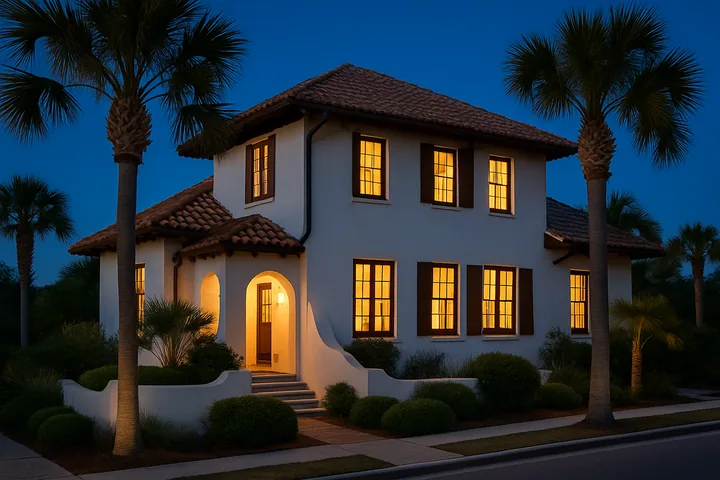
Illustrative Seaside Florida beach cottage

Seaside Beach Cottage

$108,113
Year-1 federal savings @ 37% bracket, 100% bonus
Purchase price$2,150,000
Depreciable basis$1,075,000
Land allocation50.0%
5-year reclassified$219,652
15-year reclassified$65,705
Total reclass27.2%
Seaside / WaterColor · SFR · STR · Built 1998
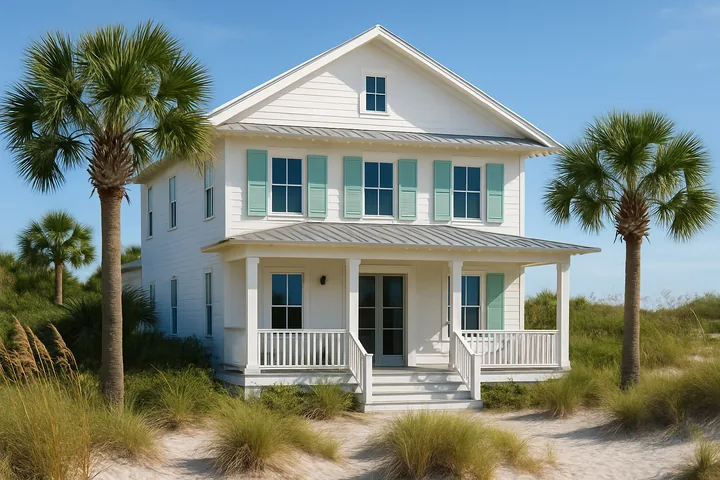
Illustrative Rosemary Beach Florida luxury cottage

Rosemary Beach Luxury Cottage

$152,148
Year-1 federal savings @ 37% bracket, 100% bonus
Purchase price$2,850,000
Depreciable basis$1,425,000
Land allocation50.0%
5-year reclassified$312,596
15-year reclassified$89,071
Total reclass28.9%
Rosemary Beach / Alys Beach · SFR · STR · Built 2014
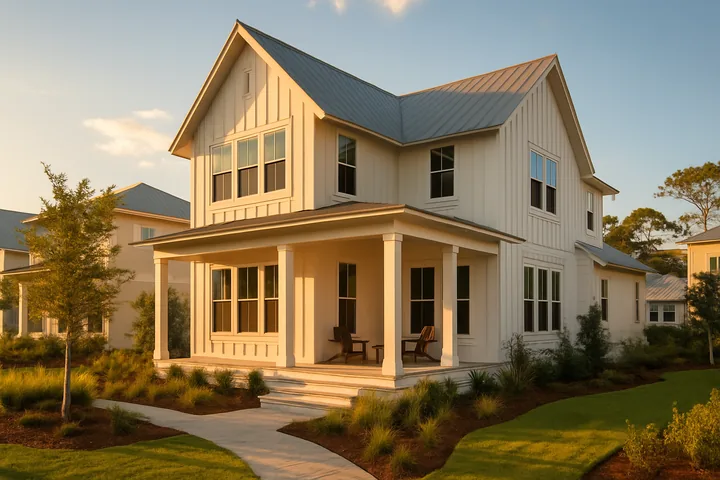
Illustrative Grayton Beach Florida beach SFR

Grayton Beach SFR STR

$107,473
Year-1 federal savings @ 37% bracket, 100% bonus
Purchase price$1,485,000
Depreciable basis$1,081,526
Land allocation27.2%
5-year reclassified$218,927
15-year reclassified$66,068
Total reclass26.9%
Grayton Beach / Blue Mountain Beach · SFR · STR · Built 2008
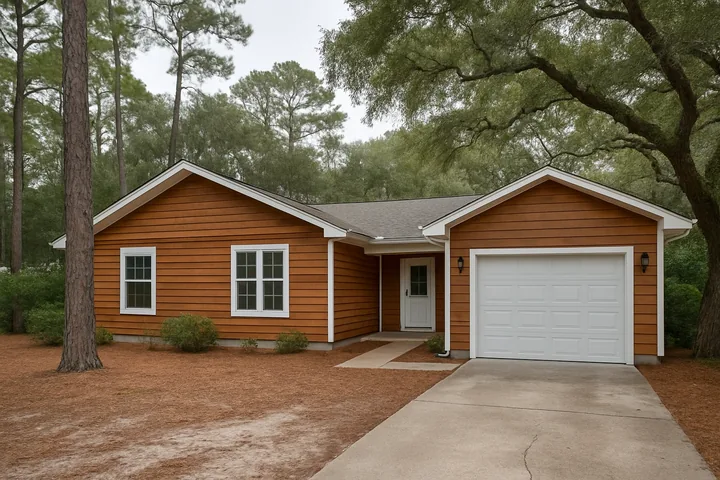
Illustrative Inlet Beach new-build SFR near Watersound

Inlet Beach New-Build

$93,069
Year-1 federal savings @ 37% bracket, 100% bonus
Purchase price$1,185,000
Depreciable basis$906,644
Land allocation23.5%
5-year reclassified$190,998
15-year reclassified$54,510
Total reclass27.7%
Inlet Beach / Watersound · SFR · STR · Built 2018
Illustrative Dune Allen Santa Rosa Beach off-corridor SFR

Dune Allen LTR

$40,711
Year-1 federal savings @ 37% bracket, 100% bonus
Purchase price$825,000
Depreciable basis$628,568
Land allocation23.8%
5-year reclassified$67,802
15-year reclassified$42,227
Total reclass17.5%
Dune Allen / Santa Rosa Beach (off-corridor) · SFR · Built 2012

Deep dive on each example →

30A neighborhood profiles

Cost-seg ROI varies more by neighborhood than by city. 30A's 5 sub-markets each have their own land-allocation pattern and property archetype:

NeighborhoodTypical valueTypical land allocationProfile note
Seaside / WaterColor $2,150,000 ~32% Original New Urbanist beach-community planned developments. Pastel cottage architectural style with strict community design covenants. High land allocation due to lot-size scarcity. STR-dominant rental mix.
Rosemary Beach / Alys Beach $2,850,000 ~36% Newer New Urbanist beach communities east of Seaside. Mediterranean and minimalist white architecture. Highest land allocation in our 30A fixtures, luxury beach-community design premium dominates the basis.
Grayton Beach / Blue Mountain Beach $1,485,000 ~28% Less-developed beach communities west of Seaside. Eclectic architectural mix, larger lots. Mid-tier land allocation. Strong STR rental cash flow profile.
Inlet Beach / Watersound $1,185,000 ~26% Eastern end of the 30A corridor near Destin Pass. Mix of beach cottage and master-planned community product. Lower land allocation than core 30A communities. Newer construction.
Dune Allen / Santa Rosa Beach (off-corridor) $825,000 ~22% Off-Highway-30A residential market in Santa Rosa Beach. Lower entry pricing, lower land allocation. Mix of LTR and STR. Walton County jurisdiction with permissive regulation.

Methodology note: "Typical land allocation" reflects baseline patterns for the sub-market. For ultra-premium or resort-tier inventory where reconstruction cost exceeds 2.0× the implied depreciable basis after subtracting baseline land, the engine applies a premium land floor (~50%) to keep the study within audit-defensible territory. This means individual fixture engine output may exceed the neighborhood typical, especially for resort-tier ski-in/ski-out, beachfront, or view-premium product where land scarcity dominates value. See the /data/ page for per-fixture land-source attribution. Results vary substantially by specific property condition, renovation history, and assessor records.

Regulatory context

Walton County maintains a permissive short-term rental regulatory environment relative to most U.S. coastal markets. STR operation is allowed throughout the 30A corridor subject to state sales tax registration, county tourist-development-tax remittance, and a county vacation rental certificate. Walton County has historically been administratively predictable and not subject to the periodic-rewrite volatility seen in markets like Joshua Tree, Austin, or Nashville. New Urbanist community design covenants at Seaside, WaterColor, Rosemary Beach, and Alys Beach affect renovation and exterior modifications but don't restrict STR operation itself. Hurricane exposure is the practical hold-period risk, similar to Destin, insurance availability and cost, special-assessment activity for envelope and balcony work, and storm-cycle capital reserve building should be modeled into underwriting. Material participation under §469 is achievable for self-managing operators but harder for portfolio holders using full-service property management, Cottage Rental Agency, 360 Blue, and other 30A managers represent significant operator hours.

For the full IRS-rule reference layer (§168(k), §469 material participation, state conformity), see irsdepreciationrules.com, our open reference site.

30A cost segregation FAQ

Why are 30A reclassification ratios lower than other Florida beach markets?

Land allocation. Engine outputs for the core 30A New Urbanist communities, Seaside, WaterColor, Rosemary Beach, Alys Beach, run 30–38% land allocation, compared to 22–28% for condo-heavy markets like Destin's Highway 98 corridor and 24–28% for less-design-covenanted Santa Rosa Beach off-corridor product. Higher land allocation means less depreciable basis as a percentage of purchase, which compresses the reclassification ratio. The absolute dollar deductions on a 30A cottage are still large because the basis is large ($2M+ properties), but the percent-of-purchase ROI tells a different story. Buyers prioritizing percent-of-purchase cost-seg ROI typically should look at off-corridor Walton County product (Grayton Beach, Dune Allen, Inlet Beach interior) rather than the core New Urbanist communities.

How does 30A compare to Destin for cost-seg purposes?

Same str_beach cohort, same Florida no-state-tax position, same engine treatment of STR FF&E uplift. The structural differences are property mix and land allocation. Destin (Okaloosa County) is condo-heavy with 22–28% land allocation on Highway 98 gulf-front product, lower land = higher reclassification ratio percentage. 30A (Walton County) is single-family beach-cottage-heavy with 30–38% land allocation on core New Urbanist communities, higher land = lower reclassification ratio percentage but larger absolute basis dollars on $1.4M+ purchases. For a buyer choosing between the two: Destin wins on percent-of-purchase ROI; 30A wins on absolute dollar deductions per property; both produce clean Florida no-state-tax acceleration. The decision usually comes down to property preference (condo vs cottage) and price point rather than cost-seg differential.

Do Seaside or Rosemary Beach community design covenants affect cost segregation?

Not the engine's component analysis or MACRS classification, design covenants affect what you can build or renovate, not how the depreciable basis is allocated. What they do affect is the renovation cost-seg case: covenants requiring period-correct exterior treatments, specific finish materials, and approved-architect involvement push renovation costs higher than equivalent off-corridor work. Higher renovation costs mean larger renovation pools, which means larger 5/15-year reclassification amounts (renovation pool is allocated more aggressively than original construction). For a Seaside or Rosemary Beach buyer doing post-purchase renovation, the design-covenant premium on renovation cost partially offsets the higher base land allocation in the reclassification math.

Does Florida's hurricane exposure affect 30A cost-seg study output?

Not the study output itself, engine MACRS classification doesn't depend on hurricane risk. But hurricane exposure affects two factors that matter to the overall study ROI. (1) Storm-cycle capital assessments: special assessments for envelope work, dune-walkover reconstruction, pool deck rebuilds, and storm-hardening retrofits add to your depreciable basis and can sometimes be cost-seg-allocated to 5- or 15-year categories. (2) Hold-period assumptions: post-2018 and post-2024 Walton County insurance costs and capital-assessment cadence affect operating margin, which affects how valuable the Year-1 cost-seg cash savings actually is relative to the multi-year operating return. Build conservative hold-period and insurance-cost assumptions into your underwriting.

Is the §469 material participation test achievable for a 30A property?

Achievable for self-managing operators, difficult for buyers using full-service property management. The IRS test requires average customer use under 7 days (30A's vacation-rental rental cadence overwhelmingly satisfies) and material participation, typically >100 hours of self-coordinated cleaning, booking, and maintenance, more than any other person spends. For a single-property owner using a full-service manager like Cottage Rental Agency or 360 Blue, the manager will spend more time than you do and the test usually fails. For owners who self-coordinate cleaning vendors, owner-direct booking via Hospitable or OwnerRez, and direct maintenance management, the test is more achievable. Document hours contemporaneously; the IRS examination on §469 is records-driven.

More general cost-seg questions answered at costsegsmart.com/faq/.

Ready to run your 30A study?

Cost Seg Smart studies are IRS-aligned, engineering-reviewed, and include written audit defense. Pricing is transparent and starts at $495 for residential properties under $300K, full pricing on the main site.